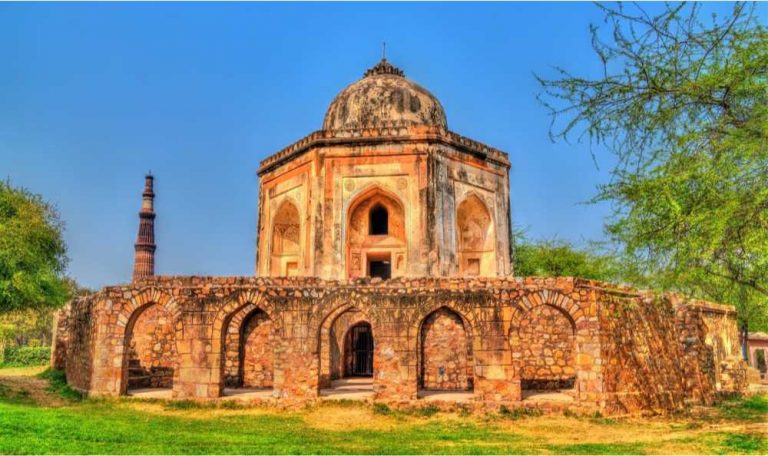
If you think Delhi is all about forts, traffic, and crowded streets, then Mehrauli Archaeological Park will change your mind. It’s a quiet world tucked behind the famous Qutub Minar, spread across 200 acres of green land and ancient ruins. Here, time moves slower. Every path, wall, and stone carries a piece of Delhi’s long history — older than the Red Fort or Humayun’s Tomb.
When you walk through this park, you aren’t just visiting old buildings. You’re stepping into a place where more than 1,000 years of Delhi’s story still lies open under the sky.
About Mehrauli Archaeological Park
Mehrauli Archaeological Park is the enormous park and an ancient historical site of Delhi. Lush green scenery, various plants, and beautiful flowers surround the park. Different species of birds and animals also live here.
Mehrauli Archaeological Park is a 200-acre expanse open to nature and fauna with scattered architectural marvels developed over ages.
The park contains numerous of tombs, mosques and step well, thus it is making a historical landmark. Park also includes variety of rocky slopes, plains and water bodies. Hauz e shamzi, Rajon ki Baoli, Gandhak ki Baoli, Jharna these are some kind of baoli’s that you can find easily in Mehrauli Archaeological Park.
Mehrauli Archaeological Park is a fantastic source of recreation for people of all ages, with educational components of ancient elements that will appeal to teachers and students, as well as the diversity and charm of natural elements
| When was Built | 1536 |
| Who is the founder | Akbar Shah |
Why This Place Is Special
Mehrauli Archaeological Park is one of the oldest inhabited areas of Delhi. It has been home to people since the 11th century, from Rajput kings and Sultans to Mughals and British rulers. What makes this park special is how all those layers of history still exist together.
You can see:
- Rajput-era ruins with rough stones.
- Sultanate tombs built with arches and domes.
- Mughal structures showing fine carvings.
- British buildings made from old remains.
Each step takes you from one century to another. That’s what makes Mehrauli different from any other monument in Delhi.
Facts about Mehrauli Archaeological Park
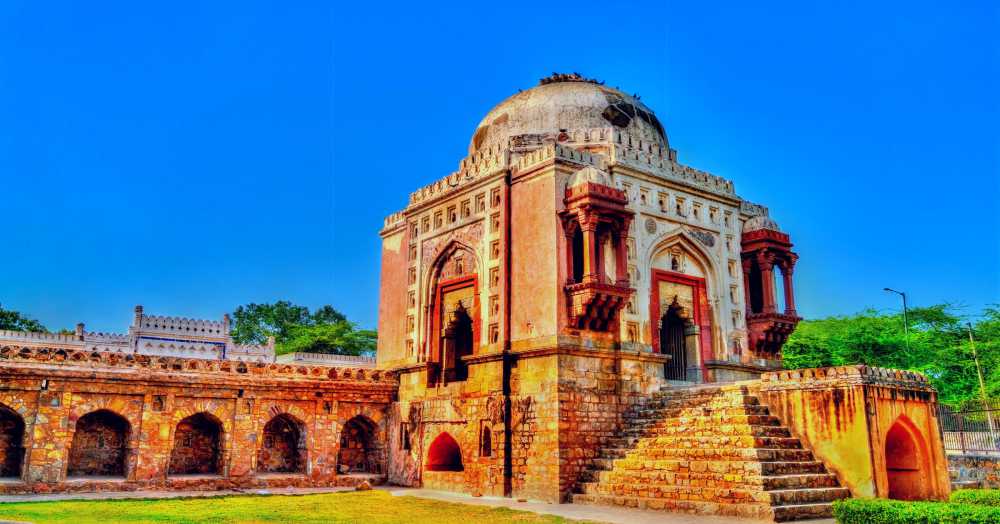
Balban Tomb holds holds high relevance in the Indian historical narrative for introducing the hallmark Islamic ‘arch’ structure into the Indian subcontinent. Every day, thousands of tourists and history buffs visit the monument, which is surrounded by legends of hauntings and curses.
Rajon Ki baoli famous stepwell located in the Mehrauli Archaeological Park. Daulat Khan built this park to give the continue water supply to its people. Now this baoli has become the culture significance because of its architecture.
Lal Kot Qila Rai Pithora was formulate as a safe shelter for soldier of the army. When Delhi is invaded by chahuan Rajput, they reconstruct the whole structure. The rubble of these ancient structures, scattered around the Qutub complex, holds significant historical value in the country.
Quil Khan’s Tomb which belonged to Emperor Akbar’s foster brother, is one of the park’s lesser-known and neglected structures. The shape of the tomb is in octagon and has a white paint in the dome.
Top Places to See Inside Mehrauli Archaeological Park
1. Balban’s Tomb – The First Arch of Delhi
Built in the 13th century, Balban’s Tomb is one of the oldest structures in the park. Historians recognize it as the first monument in India to use a true stone arch — a design later adopted in many Mughal buildings.
The tomb is in ruins now, but it still feels strong and timeless. When you stand there, you can imagine how it must have looked when Delhi’s early rulers lived here.
2. Jamali-Kamali Mosque and Tomb – A Place of Peace
This site is both a mosque and a tomb built for a Sufi saint named Jamali and his companion Kamali.
The red and white stone walls are decorated with delicate carvings and verses. Inside, it feels calm and silent, away from the city’s noise.
Local people often call it a haunted spot, but during the day, it’s peaceful and full of light.
3. Rajon Ki Baoli – The Stepwell of Masons
This is one of the most beautiful stepwells in Delhi. Built by masons (called “Rajons”), Rajon Ki Baoli is three stories deep, with arches on each level.
When sunlight falls through the arches, it creates beautiful patterns on the walls. The air here is cooler than the rest of the park, and it’s a great place to sit and rest for a while.
4. Gandhak Ki Baoli – The Healing Water
Just a short walk from Rajon Ki Baoli is another stepwell called Gandhak Ki Baoli. The word Gandhak means sulfur. Long ago, people believed that this well’s water had healing powers because of its smell and minerals.
Today, it’s quieter and often half-filled, but still a wonderful spot to see how ancient Delhi managed water systems.
5. Anangtal Baoli – The Hidden Stepwell
Many tourists miss this one because no clear signs mark it. King Anangpal II, one of Delhi’s earliest rulers, built Anangtal Baoli in the 11th century.
It’s one of the oldest water structures in the city and possibly older than the Qutub Minar. The trees and stones now half-bury the well, but when you find it, you’ll feel like you’re discovering a forgotten part of Delhi’s history.
Things to Do at Mehrauli Archaeological Park
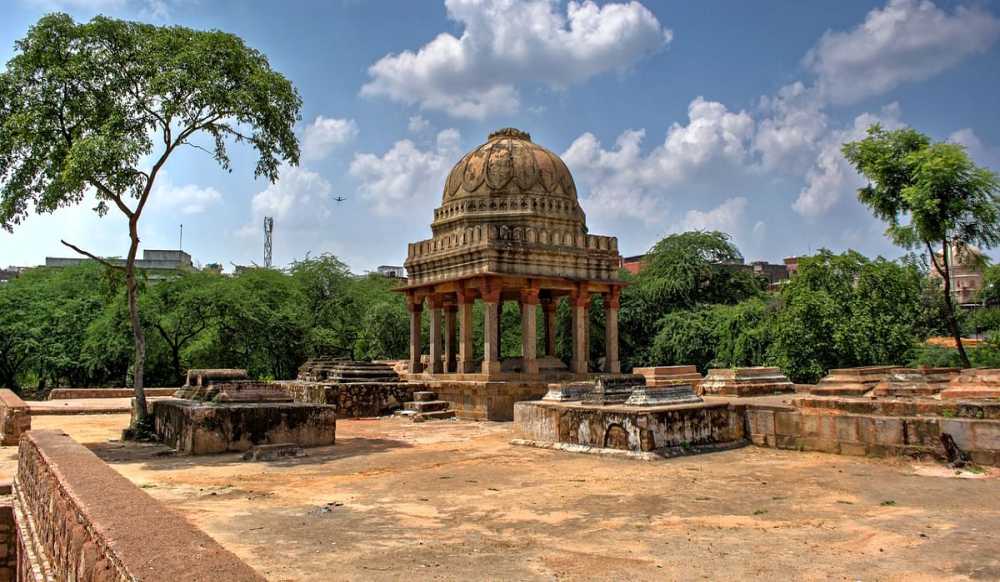
- This place always bustles with school and college students who have an interest in history and architecture.
- This place has an ancient element and a historical architecture that it makes a place picture perfect. It is an amazing place for whom who have an interest in History.
- There is a fun water activity like boat house, swimming inside the park.
- Qutub Minar is situated in front of Mehrauli Archaeological Park, so thereby you can visit both historical site at one time.
Hidden Things Most People Miss
- Old tunnels once connected Mehrauli to Qutub Minar, but they are now sealed.
- British cement marks are still visible on some walls, showing their early repair attempts.
- Wild peacocks and parakeets roam freely here — it’s great for bird lovers.
- During monsoon, the stepwells collect water again, and the whole park feels alive.
- Some ruins remain unnamed, still waiting to be identified by archaeologists.
These small details make Mehrauli Archaeological Park feel more like an adventure than a tourist site.
Closed, Open, Timings & Fee Information
| Timings | 5:00 am to 6:30 pm |
| Entry Fees | No Charges |
List Places to Visit around Mehaurali Archaeological Park
| S.No | Name | Timings | Closing Days | Distance |
| 1 | The Garden of Five Senses | 9:00 am to 5:30 pm | Never Closed | 16 Min, 3.1 km |
| 2 | Jahaz Mahal | 10:00 am to 7:00 pm | Never Closed | 12 Min, 3.1 Km |
| 3 | Lotus Temple | 8:00 am to 5:00 pm | Closed on Monday | 33 Min, 9.6 Km |
| 4 | National Rail Museum | 10:00 am to 5:00 pm | Closed on Monday | 28 Min, 10.4 Km |
| 5 | Waste to Wonder Theme Park | 11:00 am to 11:00 pm | Closed on Monday | 42 Min, 14.3 Km |
Why We Recommend Visiting Mehrauli Archaeological Park
Mehrauli Archaeological Park is not polished like other tourist spots — and that’s what makes it beautiful.
It’s raw, quiet, and real. Every monument tells a story of change — of kings, saints, workers, and even local caretakers who still protect it.
When you walk through its broken arches, sit beside its wells, or stand under its old trees, you start to see Delhi differently. It’s not just a city of modern life — it’s a city built on history, layer by layer.
Conclusion
If you love exploring places that are quiet, real, and full of history, Mehrauli Archaeological Park should be on your list.It’s not just a park — it’s a museum without walls. You won’t find loud tourists or long queues here. You’ll find broken stones, trees whispering in the wind, and history’s voice echoing softly across the ruins.
So, take your time, walk slowly, and let Delhi’s oldest neighborhood tell you its stories — one stone at a time.
FAQ’s
Mehrauli Archaeological Park is one of Delhi’s oldest heritage sites, spread across 200 acres with over 100 ancient monuments. It shows Delhi’s history from the Rajput to Mughal and British periods — all in one place.
The park is over 1,000 years old. Its earliest structures, like the Anangtal Baoli and Lal Kot Fort, date back to the 11th century, built by King Anangpal II.
No, entry to Mehrauli Archaeological Park is completely free. You can visit anytime between 6:00 AM and 6:00 PM.
The must-visit sites inside the park include:
Balban’s Tomb
Jamali-Kamali Mosque and Tomb
Rajon Ki Baoli
Gandhak Ki Baoli
Zafar Mahal
Anangtal Baoli
Hijron Ka Khanqah
Each site represents a different part of Delhi’s history.
You need at least 3 to 5 hours to explore the main attractions comfortably. If you want to walk deeper and see hidden monuments, plan for a half-day visit.
The park is located behind Qutub Minar in South Delhi.
Nearest Metro Station: Qutub Minar (Yellow Line)
By Car: You can park near the Qutub Minar complex and walk to the park entrance.
Yes, local guides are available near the entrance or Qutub Minar area. You can also explore on your own since most paths and monuments are open and easy to find.
Yes, but the paths are uneven in some areas. It’s best to wear comfortable shoes and move slowly. Kids usually enjoy exploring the open ruins and stepwells.
You should visit if you enjoy history, old architecture, and peaceful walks. It’s one of Delhi’s few places where ancient and modern worlds meet quietly, without crowds or noise.






You must be logged in to post a comment.