Dussehra is one of the biggest Hindu festivals in India. It celebrates the victory of good over evil and light over darkness. Every year, millions of people across the country come together to participate in rituals, fairs, plays and family get-togethers. Additionally, Dussehra is also known as Vijayadashami and is closely related to the grand festival of Navratri.
In this post you will get to know everything about Dussehra 2026 and 2027. This includes dates, general puja timing guidance, history, rituals, regional traditions, holiday information and how people celebrate it in modern times.
For example, if you want to explore more about festival celebrations, consider learning about Ganesh Chaturthi traditions and their regional significance.
When is Dussehra in 2026 and 2027?
In 2026, Dussehra will be celebrated on Tuesday, October 20, 2026. In 2027, it will be celebrated on Saturday, October 9, 2027. The festival falls on Dashami Tithi of Shukla Paksha, or the waxing-moon phase, in the Hindu month of Ashwin.
- Dashami Tithi Begins: Around October 19–20 in 2026 and October 8–9 in 2027; exact timing depends on the local Panchang
- Dashami Tithi Ends: Around October 20–21 in 2026 and October 9–10 in 2027; consult a city-specific Panchang for the precise time
- Vijay Muhurat: During the afternoon on the respective Dussehra date, with the exact auspicious window varying by location
The main festival date is generally observed across India. However, local traditions, holiday schedules and ritual timings may vary.
Why Do We Celebrate Dussehra?
Dussehra celebrates the occasion of good winning over evil. The festival has two main legends. In North India, it marks the occasion when Lord Rama defeated Ravana and liberated the world from Ravana’s control. In East India, it celebrates when Goddess Durga defeated the demon Mahishasura after a nine-day fight.
Both legends convey that the scales will always tilt toward truth and righteousness. This remains true despite how powerful evil may seem. That is why people across the country burn effigies of Ravana, worship Goddess Durga and celebrate Dussehra with happiness and togetherness.
Religious and Cultural Significance in 2026 and 2027
Even today, Dussehra is more than just a festival. It serves as a reminder to fight our inner evils, such as anger, jealousy and pride. Consequently, it inspires people to live with truth and righteousness.
Dussehra also brings communities together. It supports cultural arts such as drama, music and dance through Ram Lila plays and Durga Puja performances. In 2026 and 2027, many communities are expected to continue adopting eco-friendly methods. These include lower-emission effigies and natural-clay idols to support environmental and social values.
The festival also connects with Navratri, the nine nights of worship before Dussehra. While Navratri focuses on devotion, fasting and honoring feminine energy, Dussehra is the grand finale that celebrates victory and strength.
Similarly, if you enjoy large-scale cultural celebrations, you might also appreciate the vibrant energy of the Festa De Diu in Daman and Diu.
Dussehra 2026 and 2027: Rituals, Customs, and Celebrations
Different parts of India follow different customs. However, the heart of Dussehra remains the same.
- Morning Rituals: Many people perform Shami Puja, Aparajita Puja and Seema Avalanghan during the day. These rituals honor weapons, tools and the Shami tree, which is considered sacred.
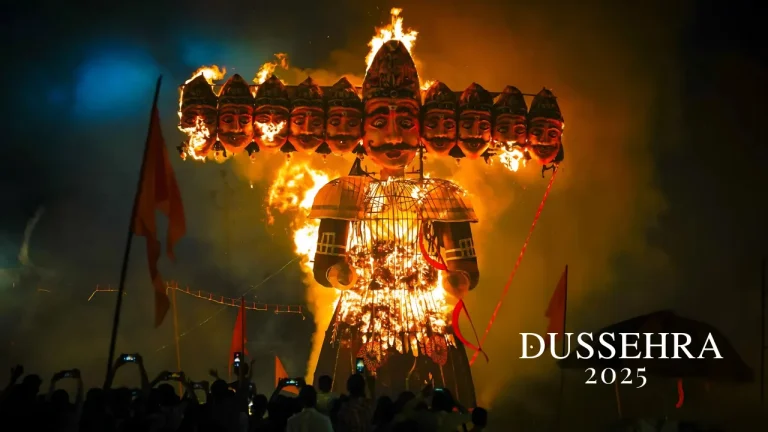
- Ram Lila and Effigy Burning: People across North India perform dramatic plays based on the Ramayana. In the evening, communities burn large effigies of Ravana, Kumbhakarna and Meghnad. These events are sometimes followed by fireworks.
- Durga Idol Immersion: In states such as West Bengal, Odisha and Assam, devotees immerse Durga idols worshipped during the festival in rivers, seas or designated immersion facilities on Vijayadashami.
- Family Gatherings: Families come together, exchange gifts and prepare traditional sweets.
Regional Variations and Unique Celebrations
India’s diversity makes Dussehra celebrations colorful and varied.
- North India: Ram Lila performances, fairs and Ravana effigy burning attract large crowds. Delhi and Varanasi are famous for major shows.
- East India: Dussehra merges with Durga Puja. Large pandals, idol processions and cultural programs mark the end of the festival. Kolkata is famous for its artistic pandals and grand immersion processions.
- South India: Karnataka celebrates Mysore Dasara with one of the most regal festivals in the country. A grand procession and cultural events are organized around Mysore Palace. In Tamil Nadu and Andhra Pradesh, families display Bommai Kolu dolls in their homes.
- West and Central India: Maharashtra observes Simollanghan, during which people exchange leaves of the Shami tree as a token of gold. Gujarat and Madhya Pradesh celebrate with folk dances and large gatherings.
- Special Celebrations: Kullu Dussehra in Himachal Pradesh is different. Instead of focusing on effigy burning, it is a week-long celebration featuring deities from surrounding villages.
Moreover, if you’re fascinated by regional festivals, explore the unique traditions at festivals in Himachal Pradesh you must experience.
For more helpful planning, read our guide to What Kumbh Mela Know.
Dussehra Holiday in 2026 and 2027
Dussehra is widely observed as a public or gazetted holiday in India. Government offices, banks and schools may close. However, schedules can vary by state, institution and local observance. Many destinations also organize fairs and cultural programs for Dussehra.
Dussehra falls on Tuesday, October 20 in 2026 and Saturday, October 9 in 2027. Holiday periods around these dates may bring larger gatherings, busier fairs and increased demand for transport and accommodation. Therefore, travelers planning short trips or family visits should confirm local event schedules and make arrangements in advance.
For more helpful planning, read our guide to Kumbh Mela Fair Festival.
Dussehra Puja Timings and Muhurat in 2026 and 2027
Choosing the right time for worship is important for many Dussehra observers. The festival is linked with Dashami Tithi of the Hindu lunar calendar. As a result, puja timing is determined according to when this tithi is observed locally. Dussehra will fall on Tuesday, October 20 in 2026 and Saturday, October 9 in 2027.
Important Timings
- Dashami Tithi: Expected to overlap October 20 in 2026 and October 9 in 2027; exact start and end times depend on the city-specific Panchang
- Aparahna Puja Time: The afternoon is traditionally considered the most auspicious period for Vijayadashami puja. The exact window varies by location and should be checked shortly before the festival.
Vijay Muhurat: This is a shorter and especially auspicious period within the afternoon. Devotees traditionally associate worship during this time with success and victory.
For more helpful planning, read our guide to Awesome Destinations For Celebrating.
Why These Timings Matter
Tradition associates the victories of Goddess Durga and Lord Rama with this auspicious part of the day. Rituals conducted during the afternoon, especially during Vijay Muhurat, are believed to bring strength, peace and prosperity to families.
Suggested Ritual Flow for 2026 and 2027
- Morning – Clean the house and altar. Decorate with flowers and rangoli, and prepare the offerings.
- Afternoon (Aparahna period) – Perform Shami Puja, Aparajita Puja and Seema Avalanghan. These rituals honor weapons, tools and the sacred Shami tree.
- Vijay Muhurat – Focus on the main prayers and offerings to either Goddess Durga or Lord Rama. This is the highlight of Dussehra worship.
- Evening – Take part in community celebrations such as Ram Lila, Ravana effigy burning or Durga idol immersion, depending on local customs.
Tips for Devotees
- Check your local Panchang for exact timings in your city. The muhurat varies according to location and local sunrise and sunset times.
- If you are unable to perform rituals during Vijay Muhurat, the broader Aparahna period is also traditionally considered auspicious.
- If your family does not follow strict timings, you can pray and perform charity during the day. The theme of Dussehra is to overcome negativity and spread positivity.
Preparations Before Dussehra
People start preparing for Dussehra days in advance.
For more helpful planning, read our guide to Festivals Events India.
- Houses are cleaned and decorated with flowers and rangoli.
- Families buy new clothes, ornaments and puja items.
- Markets fill up with sweets, toys and effigies.
- Ram Lila artists rehearse for weeks to perform the story of the Ramayana.
- Many people keep fasts during Navratri. They conclude them around Navami or Dussehra according to family tradition.
In fact, major celebrations similar to Dussehra also take place at other iconic events. For instance, you can witness grand festivities at Republic Day celebrations at India Gate.
Food, Sweets, and Fasting Customs
Food is an essential part of Dussehra.
- In North India, popular foods include jalebi, kheer and poori with aloo sabzi.
- In Maharashtra, families share puran poli and Shami leaves with friends and relatives.
- In Bengal, bhog, or a sacred food offering, commonly includes khichdi, sweets and fried items served to devotees.
- Many people fast during part of the festival. They later enjoy a large feast with family. You can also check out Dussehra Dishes for the Festive Season.
Modern Trends for Dussehra 2026 and 2027
Festivals evolve with the times. Dussehra is no different.
- Eco-friendly practices: More communities are choosing biodegradable or natural materials for idols and effigies.
- Technology in celebrations: Digital screens, coordinated light displays and live streaming are increasingly used for Ram Lila performances and public events.
- Social awareness: Alongside traditional celebrations, many community groups use the festival to share messages about corruption, pollution and social inequality.
- Youth involvement: Young people actively participate in cultural shows, street plays and charitable events during Dussehra.
Additionally, if you’re interested in experiencing vibrant desert celebrations, don’t miss the Jaisalmer Desert Festival held annually in Rajasthan.
Best Places To Visit in North India on Dussehra
North India hosts some of the grandest Dussehra celebrations in the country. Here are the top destinations to consider.
- Delhi: Witness massive Ram Lila performances and effigy burnings at Ramlila Maidan and other iconic locations. Thousands gather to watch dramatic enactments of the Ramayana and spectacular fireworks displays.
- Varanasi: Experience one of the most spiritual Dussehra celebrations along the ghats of the Ganges. Devotees perform special pujas and witness grand Ravana effigy burnings in a deeply traditional atmosphere.
- Kullu (Himachal Pradesh): Join the week-long Kullu Dussehra, where village deities are carried in procession to the Dhalpur Maidan. This festival blends devotion with vibrant folk music and dance performances.
- Amritsar: Observe unique regional traditions around the Golden Temple and nearby venues. Communities organize Ram Lila plays and fairs that reflect Punjabi culture and hospitality.
- Jaipur: Enjoy royal Rajasthani Dussehra celebrations with processions, cultural programs and large-scale effigy burnings. Many heritage venues and forts host special events during the festival.
Dos and Don’ts During Dussehra
To make the festival safe and meaningful, here are a few dos and don’ts:
- Dos:
- Perform puja according to the locally applicable muhurat.
- Respect local customs and traditions.
- Choose eco-friendly celebration practices.
- Share food and happiness with those in need.
- Don’ts:
- Avoid loud or hazardous firecrackers.
- Don’t pollute water bodies during idol immersion.
- Avoid overcrowded areas and unsafe practices during fairs.
Furthermore, if you plan to explore other vibrant Rajasthani festivals, consider attending the colorful Bikaner Camel Festival as well.
Conclusion
Dussehra will be celebrated on October 20 in 2026 and October 9 in 2027. It is a festival of happiness, togetherness and values. Whether it is Ravana effigy burning, Durga idol immersion or the royal Mysore procession, the message of Dussehra is clear: truth and goodness ultimately prevail.
As you celebrate in 2026 or 2027, participate in rituals and enjoy the cultural beauty. Consider how to overcome negativity in your life. May Dussehra bring light, peace and happiness to your home and travels.
FAQs About Dussehra 2026 and 2027
Sharad Navratri is expected to run from Sunday, October 11 to Monday, October 19 in 2026 and from Thursday, September 30 to Friday, October 8 in 2027. The nine nights honor the nine forms of Goddess Durga and lead into Vijayadashami, celebrated on the following day. Local Panchang observances can vary.
Dussehra, also known as Vijayadashami, will be celebrated on Tuesday, October 20, 2026 and Saturday, October 9, 2027. Exact Dashami Tithi and puja timings should be checked in a local Panchang because they vary by location.
Diwali is expected to be observed on Sunday, November 8 in 2026 and Friday, October 29 in 2027. The festival follows Dussehra and is traditionally associated with Lord Rama’s return to Ayodhya after defeating Ravana. Confirm local observance dates before making travel plans.
The main Durga Puja celebrations take place from Shashthi through Vijayadashami during the final days leading up to Dussehra. In 2026, the principal celebrations will occur in mid-to-late October and conclude around October 20. In 2027, they will occur in early October and conclude around October 9. Individual ritual dates can vary according to the local calendar.
Dussehra is important because it celebrates the victory of good over evil. In North India, it represents Lord Rama’s victory over Ravana, while in East India it represents Goddess Durga’s victory over Mahishasura. The festival reminds people to choose truth, courage and kindness. It also unites families and communities through rituals, fairs and cultural programs.