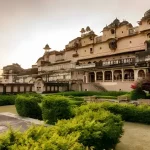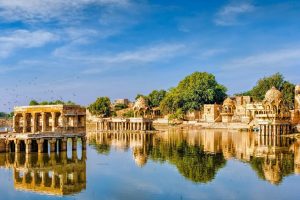
Orchha Fort is not just a historic site—it is a living story carved in stone. Located on an island formed by the Betwa River in Madhya Pradesh, this medieval fort complex reflects the royal pride, artistic vision, and cultural depth of the Bundela dynasty. Even today, walking through its courtyards feels like stepping back into a glorious chapter of Indian history.
History of Orchha Fort
In 1531, it was built by Raja Rudra Pratap Singh (first Bundela king), who moved his capital from Garh Kundar to this secret and naturally secure location, which suited him well due to its proximity to the river system. The name “Orchha” is from the local term that means “hidden place” and captures the essence of the area perfectly.
During the Bundela period, Orchha was one of the most powerful kingdoms of Central India. Their reign lasted more than 200 years. During this time, many resources were invested in creating forts, temples, and palaces, along with artworks and town planning. This time was considered the height of Orchha’s cultural and architectural development.
Although the Mughal Empire would later take over control of Orchha, they preserved its previous identity and so gave it a unique blend of Indo-Islamic architecture with Rajput architecture, thus forming the architecture of Orchha Fort.
Orchha Fort Complex: What’s Inside?
Orchha Fort is not a single building. It is a large fortified complex consisting of several iconic structures:
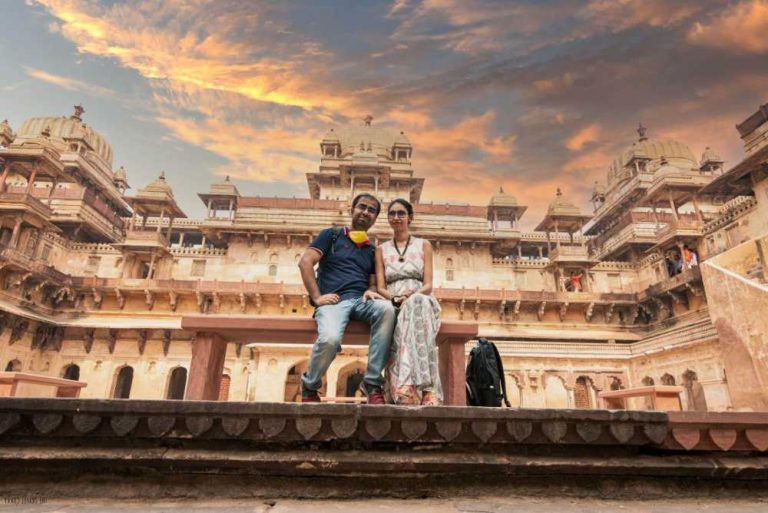
Jahangir Mahal
Built to welcome Mughal Emperor Jahangir, this palace is the most photographed structure in Orchha. Its symmetrical structure, overhanging balconies, domes, and fine stonework display a perfect balance of strength and beauty.
Raja Mahal
The palace served as the royal residence of the Bundela kings. Inside, you will find faint yet stunning frescoes depicting religious themes, royal life and mythology.
Rai Parveen Mahal
The palace was built for Rai Parveen, a famous poet and dancer in the court of King Indramani. It is a rare example of the respect given to art and artists in medieval India.
Together, these buildings make Orchha Fort one of the most artistically rich heritage sites in Madhya Pradesh.
Architecture Style of Orchha Fort
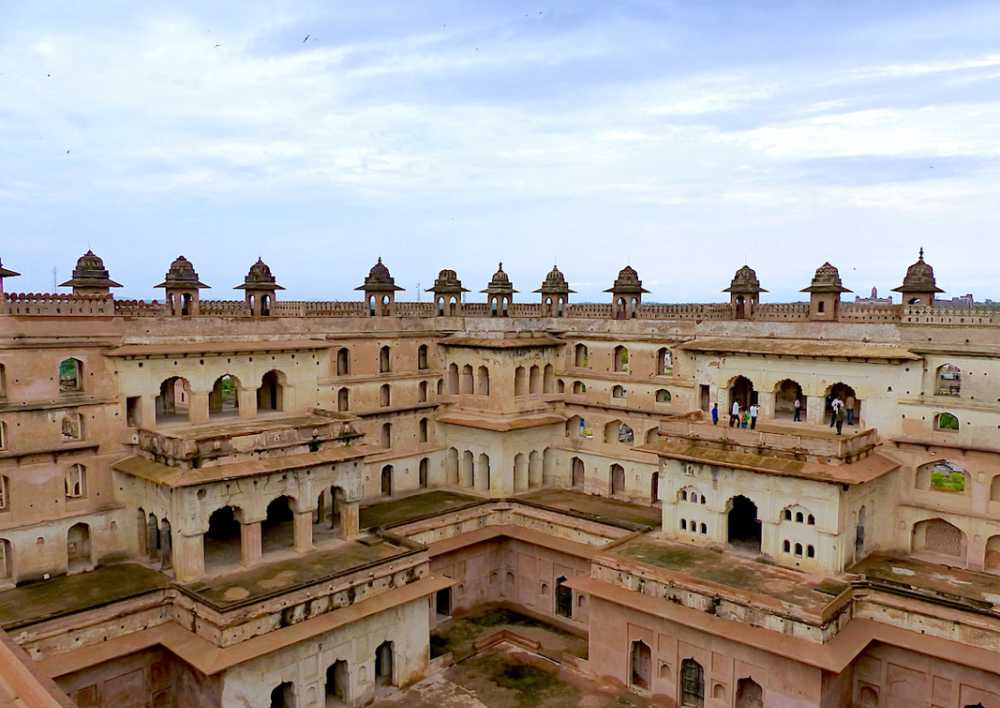
Orchha Fort appears quite simple. However, once an observer closely examines the structure, it displays a stunning combination of Rajputana and Indo-Islamic architectural styles.
Key architectural highlights include:
- Strong fort walls with decorative carvings
- Arched doorways and domed ceilings
- Open courtyards for light and ventilation
- Painted murals using natural colors
The combination of elegant and robust features differentiates this fort from all other forts in India.
Orchha Fort Timings, Entry Fee & Time Required
| Details | Information |
|---|---|
| Opening Time | 9:00 AM |
| Closing Time | 6:00 PM |
| Time Required | 2 to 3 hours |
| Entry Fee (Indians) | ₹10 |
| Entry Fee (Foreigners) | ₹250 |
Tip: Visit early morning or late afternoon to avoid heat and crowds.
Things to Do at Orchha Fort Complex
The fort of Orchha, India, provides opportunities to connect historical times with current natural and cultural experiences rather than just being a site to visit for photographs of buildings.
Explore Royal Art & Murals
When visiting Jahangir Mahal and Raja Mahal, take some time to look at the beautiful frescoes on the walls. There is a story behind each fresco depicting different aspects of life in the royal courts, religious beliefs, and local legends.
Relax by the Betwa River
The fort overlooks the Betwa River. Sit by the rocky banks, enjoy the calm water, or watch a peaceful sunset. During monsoon, river rafting and kayaking are also available.
Nature Walk in Orchha Sanctuary
Orchha Wildlife Sanctuary is situated in the region between the Betwa and Jamni rivers. There is a 12 km nature trail where visitors can see birds, deer, and local vegetation.
Shop Local Handicrafts
Visitors to Orchha can also buy souvenirs, including Dokra metal artwork, Bastar, handmade paintings, and antiques, at local stores near the Orchha Fort.
Interesting Facts About Orchha Fort
- Orchha was once one of the strongest states in Bundelkhand
- Jahangir’s palace was built only for a royal visit
- Orchha is one of the few places where Lord Rama is worshiped as a king
- The fort looks different in morning light, sunset, and moonlight
- Many parts of Orchha still seem untouched by modern tourism
Places to Visit Near Orchha Fort Complex
| Visiting Places | Timing | Entry Fees | Distance from Orchha Fort |
|---|---|---|---|
| Chaturbhuj Temple | 9am-5pm | None | 400.0 m |
| Jehangir Mahal | 9am-6pm | 10 INR for Indians, 20 INR for Foreigners | Near By |
| Lakshmi Narayan Temple | 4:30am-1:30pm and 2:30-9:00pm | None | 1.4 km |
| Ram Raja Temple | 8:00am-12:30pm and 5:00pm-10:00pm | None | 800.0 m |
| Orchha Wildlife Sanctuary | 10:30am-5:30pm | INR 15 | 2.1 Km |
How to Reach Orchha Fort Complex
By Air
Gwalior Airport is the nearest airport, which is about 150 km away. From there, take a taxi to Orchha.
By Train
The nearest railway station is Jhansi Junction, which is just 16 km from Orchha. Taxis and autos are easily available.
By Road
Orchha is well connected by road to Jhansi, Gwalior, Khajuraho, and Bhopal.
Final Thoughts
While the Orchha Fort complex may not be as well-known or crowded as some other monuments, it can provide more of an experience with more of a history than those monuments, plus a more subdued atmosphere. The palaces, riverbank location, and many artistic elements of the Orchha complex will attract travelers looking for a heritage experience without the hustle and bustle of the larger monuments. If you’re looking to see India through the eyes of a royal, make sure to include Orchha on your list of places to visit when you’re traveling through India at a more leisurely pace.
FAQ’s
Orchha Fort is famous for its grand palaces, especially Jahangir Mahal, its scenic location along the Betwa River, and its unique blend of Rajput and Mughal architecture. Visitors also admire its detailed murals and peaceful atmosphere.
Raja Rudra Pratap Singh, the founder of Orchha and the first Bundela ruler, built Orchha Fort in the early 16th century.
Exploring Orchha Fort usually takes 2 to 3 hours. Visitors who enjoy photography, history, or art may spend more time inside the palace complex.
Orchha Fort is open daily from 9:00 AM to 6:00 PM. Entry is allowed until evening, but it is best to visit earlier in the day.
The entry fee for Orchha Fort is ₹10 for Indian visitors and ₹250 for foreign tourists.
Jahangir Mahal attracts the most visitors because of its balanced design, elegant balconies, domes, and fine stone carvings.
Orchha Fort is a fort complex, not a single structure. It includes Jahangir Mahal, Raja Mahal, Rai Parveen Mahal, and open courtyards.
Yes, Orchha Fort can easily be visited in a one-day trip, along with nearby temples and the Betwa River area.
People call Orchha a hidden city because the rulers built it in a naturally protected location, surrounded by rivers that helped defend the region.