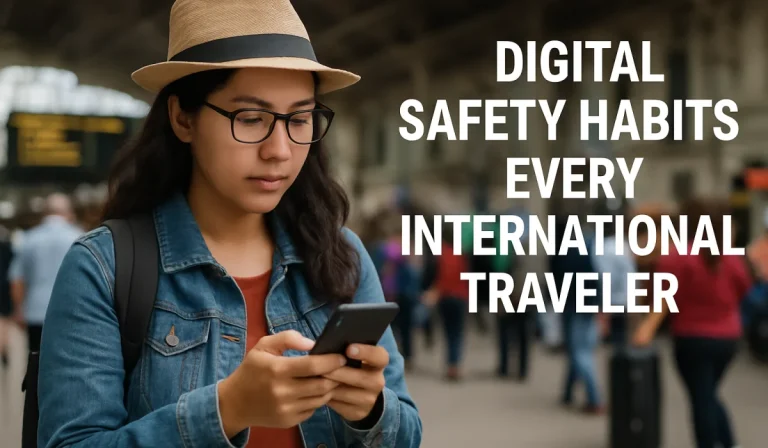
Digital Safety Habits Every International Traveler Should Build
Travel does something to your brain. You get caught up in the excitement of new places, new food, new everything, and suddenly the last thing on your mind is whether your data is safe. But here is the thing: the moment you land somewhere unfamiliar and connect to an airport network, or pull up your banking app from a hotel room, you are more exposed than you realize. Hackers and data thieves know travelers are distracted. That is exactly why they go after them.
Protecting yourself online while you travel is not some big complicated thing though. You do not need to be technical. You just need a handful of habits that you build once and carry with you everywhere you go.
Why Digital Safety Matters More When You Travel
Back home, everything feels familiar. Your network, your devices, your routine. Travel breaks all of that. You are constantly moving, connecting to new networks, checking into places you have never been before, and operating in environments you know nothing about.
Open Wi-Fi networks are everywhere when you travel, and most people use them without a second thought. That is a problem. There is a type of attack called a “man-in-the-middle” attack where someone sitting on the same network can intercept everything passing between your device and the internet. Passwords, card details, private messages. All of it, without you having any idea it is happening.
Then there is jet lag, the excitement of being somewhere new, and a general sense of being off your usual routine. When your guard is down, mistakes happen. That is why building these habits matters so much. They protect you even when you are not actively thinking about protection.
Use a VPN Before You Connect to Anything
Every traveler needs a VPN. Full stop. It encrypts your internet connection so that even on a completely open network, nobody can see what you are doing. Think of it as a private tunnel between your device and the rest of the internet.
Set it up before you leave. Not at the airport, not after you have already been online for two days. Before. If you do not have one yet, head over to ExpressVPN’s download page and get it installed while you are still at home. It works on your phone, your laptop, your tablet, all of it. Once it is running, the habit is simple: every time you connect to a network that is not your own, the VPN goes on first.
Lock Down Your Accounts Before You Leave
Nobody wants to spend time on this when there is packing to do and a trip to look forward to. But twenty minutes of account security prep at home can save you from a complete nightmare while you are thousands of miles away.
Turn on two-factor authentication on anything important. Email, banking apps, payment platforms, anything with your personal or financial information sitting behind it. What this does is simple: even if someone gets your password, they still cannot get in without that second verification step. It is a small thing that makes a big difference.
Reset any weak passwords while you are at it, especially ones you have used on more than one account. A password manager takes the hassle out of that. And call your bank before you go. Let them know where you are headed so your card does not get flagged and blocked the moment you try to pay for dinner abroad.
Be Thoughtful About What You Share Online
Posting travel content in real time is just what people do now. Nothing wrong with it. But the details you share and when you share them can matter more than you expect.
Telling the internet your exact location while you are still standing there, or mentioning that your house is going to be empty for two weeks, is the kind of thing that can be misused. Post a little after the fact. Share the highlights once you have moved on.
Same goes for shared devices. If you ever need to use a computer at a hotel business center or a hostel, be careful. Log out of everything when you are done. Better yet, avoid logging into sensitive accounts on any device that is not yours. It is just not worth the risk.
Understand the Digital Landscape of Where You Are Going
Where you are going matters. Not every country has the same internet environment, the same privacy laws, or the same level of network security. Doing a little homework before you arrive goes a long way.
If South Asia is on your itinerary, reading up on cybersecurity tips for traveling to India before you fly is worth the time. India has one of the biggest and fastest-growing internet user populations in the world, and in tourist-heavy areas, the public networks range from decent to genuinely risky. Knowing what to expect helps you decide which networks to trust, which apps you actually need on your phone, and how local data laws might affect you.
Some destinations also block access to certain websites and apps entirely. Having your VPN already set up before you arrive means you are covered on that front too.
Keep Your Devices Updated and Backed Up
Old software is basically an open invitation. Security flaws get discovered in operating systems and apps all the time, and developers push out updates to fix them. But if you never install those updates, the fix does not help you.
Before any trip, update everything. Your phone, your laptop, your apps, your browser. If you use antivirus software, make sure that is current too. It takes maybe ten minutes and it closes off a lot of easy entry points that attackers look for.
Back up your data too. Photos, documents, anything you would genuinely miss. Upload it to a secure cloud service or copy it to an external drive before you leave. Losing your phone on a trip is already stressful enough. Losing every photo and file on it at the same time is a whole other level of awful.
Watch Out for Phishing and Scams Targeting Travelers
Travelers get targeted by phishing scams more than most people realize, partly because being in an unfamiliar place makes you more likely to act quickly without stopping to think.
One of the most common tricks is the fake hotel Wi-Fi login page. It looks exactly like the real thing. You connect, you enter your details, and just like that you have handed your credentials to whoever set it up. Always ask hotel staff for the exact network name before you connect. And keep that VPN on.
Watch your inbox too. If an email arrives telling you there is a problem with your booking or an urgent issue with your account, do not click anything in it. Go directly to the official website instead. Phishing emails are designed to make you feel like you need to act right now. That urgency is the trick. Slow down, go direct, and you will not fall for it.
Build These Habits Before You Need Them
Most people only think about digital safety after something has already gone wrong. By then, the damage is done. The whole point of building habits is that they are already in place before you ever need them.
None of this is hard. Setting up a VPN, switching on two-factor authentication, being a bit careful on public Wi-Fi, updating your software, backing up your files. These are all small things that take very little time and make a real difference over the long run.
Conclusion
Travel should feel good. Freeing. Not like something you need to stress about. Getting your digital security sorted before you leave is one of those quiet investments that just sits in the background keeping you safe while you get on with enjoying the trip. Make it part of your routine once, and you will never have to scramble to figure it out mid-journey again. Go explore. Just do it smartly.